5s
+1

Submission successful!

|
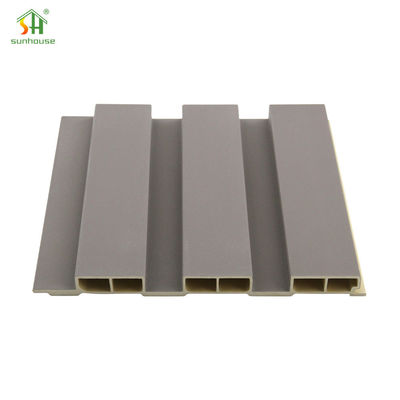
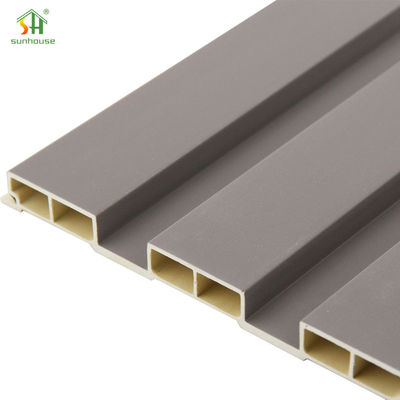
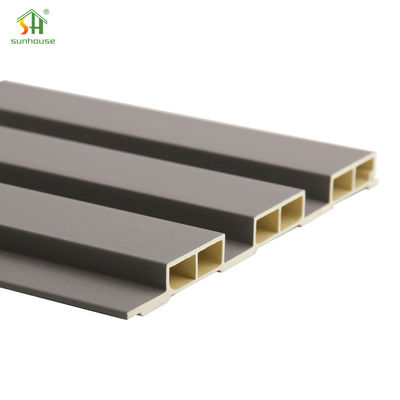
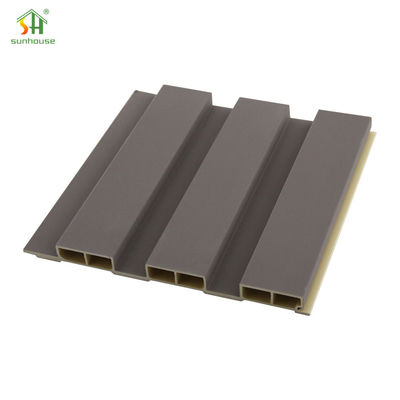
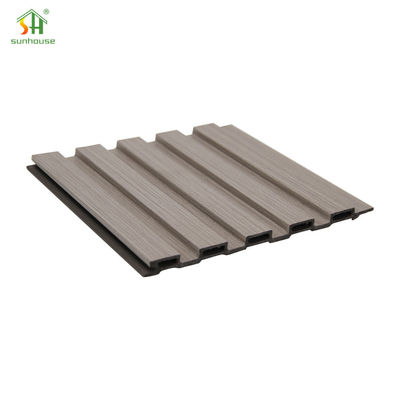
| Merknaam: | SUNHOUSE |
| Modelnummer: | WPC-42 |
| MOQ: | 200㎡ |
| Betalingsvoorwaarden: | T/T |
Als inkoopmanagers en architecten materialenopties voor grootschalige commerciële ontwikkelingen, gastvrijheidslocaties en institutionele gebouwen evalueren,Hout plastic composiet (WPC) wandsystemen zijn een hoogwaardig alternatief voor traditioneel houtDit overzicht, gebaseerd op meerdere voltooide projecten in Azië en het Midden-Oosten, bevat technische fundamenten, geverifieerde prestatie-resultaten,en de huidige marktdynamiek.
Moderne WPC-panelen bestaan doorgaans uit 50-65% gerecyclede houtvezels of bloem, 30-45% hoogdichte polyethyleen (HDPE) of polypropyleen en 3-8% gespecialiseerde toevoegingsmiddelen voor UV-stabilisatie, koppeling,en brandprestatiesHet holle profiel met meerdere kamers zorgt voor een optimale sterkte/gewichtsverhouding.die doorgaans resulteren in panelen met een gewicht van 40-60% minder dan de gelijkwaardige panelen van massief hardhout, met behoud van een superieure dimensionale stabiliteit.
Belangrijkste prestatiemeters die in veldtoepassingen worden waargenomen, zijn onder meer waterabsorptie van minder dan 1%, buigsterkte van meer dan 25-35 MPa en uitstekende weerstand tegen biologische afbraak.Deze eigenschappen maken WPC bijzonder geschikt voor gebieden met een hoge luchtvochtigheid, zoals de lobby van hotels, gezondheidszorgcorridors en kantoorinstallaties waar traditionele materialen vaak frequent moeten worden vervangen.
Het wereldwijde WPC-wandpaneelsegment werd in 2024-2025 gewaardeerd op ongeveer USD 4,5 miljard en zal naar verwachting in 2033 USD 7,2 miljard bereiken, met een CAGR van ongeveer 6,5%.Bredere markten voor hout-plastic composieten tonen nog sterkere dynamiek, met voorspellingen die variëren van 6,5% tot 8,6% CAGR tot 2031, gedreven door duurzaamheidsmandaten en verstedelijking in de regio's van Azië en de Stille Oceaan.
Belangrijkste drijvende krachten zijn de strengere certificering van groene gebouwen (LEED, BREEAM), de vraag naar onderhoudsarme oplossingen in commercieel onroerend goed,en circulaire-economiebeleid dat gerecycleerde materialen aanmoedigt. Europa en Azië zijn momenteel de leiders in zowel binnen- als buiten beschermde toepassingen.
Een middelgrote bedrijfscampus rapporteerde snellere installatiecycli (bijna 2.5 keer sneller dan massief houten bekleding) en een lagere structurele belasting van de aangepaste gebouwen door een lichter gewicht van de panelen.
| Aantekening | WPC-composite (typisch) | Massivhout | Standaard gips/PVC |
|---|---|---|---|
| Vochtbestendigheid | Uitstekend (≤0,8-1% absorptie) | Arm tot matig | Gematigd |
| Onderhoudscyclus | Minimaal 5 tot 10 jaar | 1-3 jaar | 2-5 jaar |
| Gewicht per m2 | 6-10 kg | 15-25 kg | 8-18 kg |
| Recycled content | Hoog (vaak meer dan 50%) | Variabele | Lage tot middelmatige |
| Thermisch/akoestisch voordeel | Goed (diffusie van holle kernhulpstoffen) | Gematigd | Variabele |
WPC-systemen zijn uitstekend in toepassingen die duurzaamheid, onderhoud en esthetische consistentie vereisen, maar kunnen niet voor alle dragende of extreme structurele behoeften geschikt zijn.gedetailleerde ontwerpcoördinatieIn het kader van het onderzoek naar de kwaliteit van de productie en de kwaliteit van de leveranciers blijft het essentieel dat de bedrijven hun activiteiten efficiënter en milieuvriendelijker maken..
Voor teams die opties voor aankomende inschrijvingen of renovaties evalueren, raden wij aan om volledige technische dossiers en referentiebezoeken aan te vragen.verkeersniveaus, akoestische doelstellingen) maakt het mogelijk meer op maat gemaakte aanbevelingen te doen op basis van bewezen installaties.

 english
 français
 Deutsch
 Italiano
 Русский
 Español
 português
 Nederlandse
 ελληνικά
 日本語
日本語
 한국
한국
 العربية
 हिन्दी
 Türkçe
 indonesia
 tiếng Việt
 ไทย
ไทย
 বাংলা
বাংলা
 فارسی
فارسی
 polski

