
5s
+1
Submission successful!

|
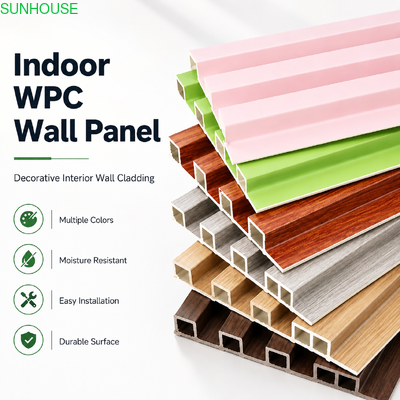
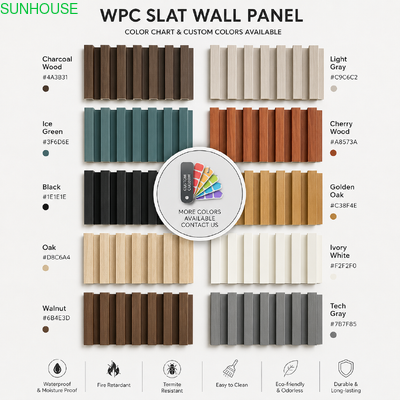
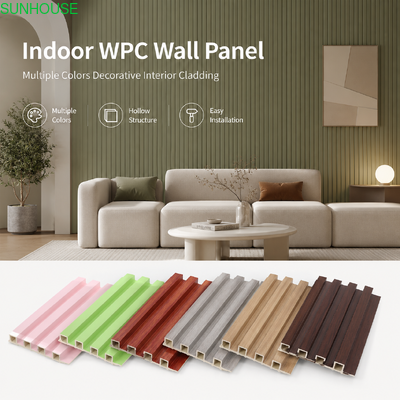
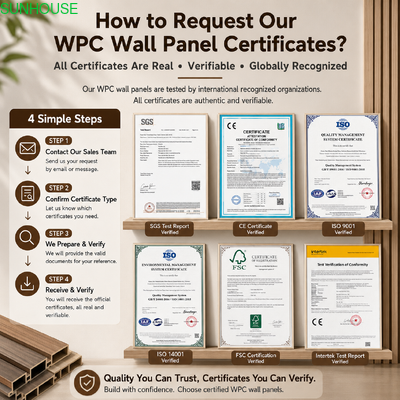
| Merknaam: | SUNHOUSE |
| Modelnummer: | WPC-08 |
| MOQ: | 200㎡ |
| Betalingsvoorwaarden: | T/T |
De keuze van een WPC-wandpaneel omvat meer dan alleen de keuze van een kleur of het vergelijken van de prijs per stuk.de holle kernstructuur en de geslepen afstand kunnen allemaal van invloed zijn op de installatie-efficiëntie, het materiaalverbruik, de visuele verschijning en de totale projectkosten.
Voor distributeurs, aannemers en projectkopers moet de juiste specificatie worden gekozen op basis van deafmetingen van de wand, installatiemethode, toepassingsomgeving, ontwerpvereisten en verzendomstandigheden.
Een van de belangrijkste aankoopdetails is het verschil tussen de totale breedte van het paneel en de effectieve breedte van de dekking.met inbegrip van de tongDe effectieve breedte is de werkelijke wandoppervlakte na aansluiting van aangrenzende panelen.
De totale gemeten breedte van de ene rand van het paneel naar de andere.
De werkelijke breedte die zichtbaar of bedekt is na de aansluiting van de rand van de tong en de groef; deze waarde moet worden gebruikt bij de berekening van de projecthoeveelheden.
| Breedteparameter | Betekenis | Aankoopbelang |
|---|---|---|
| Algemene panelenbreedte | Volledige fysieke breedte inclusief aansluitkanten | Gebruikt voor de controle van het productprofiel, de afmetingen van de karton en het laadvolume |
| Effectieve bereikbreedte | Werkelijke breedte na installatie | Gebruikt voor het berekenen van het aantal panelen dat nodig is voor de wandoppervlakte |
| Geplaatste oppervlaktebreedte | Zichtbaar decoratief gebied op het voorvlak | Beïnvloed het ritme, de afstand en de visuele schaal van de afgewerkte muur |
| Overlappingsbreedte van het gewricht | Deel van het paneel verborgen na aansluiting | Invloed op de effectieve dekking en verbindingsstabiliteit |
WPC-wandpanelen zijn verkrijgbaar in verschillende diktes en profielen.Kopers moeten het volledige profiel vergelijken, met inbegrip van de buitenwanddikte, de inwendige ribben, de holle kamers, de sluitkanten en het gewicht van het paneel.
| Specificatiefactor | Mogelijke voordelen | Punten om te controleren |
|---|---|---|
| Dun decoratief profiel | Minder uitsteken van de muur en mogelijk lager materiaalgewicht | Controleer de eisen inzake stijfheid, vergrendelingssterkte en vlakheid van de wand |
| Medium-diepte gevlochten profiel | Evenwichtige decoratieve diepte, gewicht en installatiegemak | Bevestig de buitenwanddikte en de interne versterking structuur |
| Profiel van de diepvloeistof | Sterker driedimensionaal uiterlijk en meer uitgesproken schaduwlijnen | Controleer de stofophoping, de hoekafwerking en de compatibiliteit van het accessoire |
| Verhoogde buitenwanddikte | Kan de slagweerstand en de randsterkte verbeteren | Verifieer de werkelijke afmetingen van de snijlijn in plaats van alleen op de nominale dikte te vertrouwen |
| Verhoogd mineraalvullingsgehalte | Kan het gewicht van het paneel en de hardheid van het oppervlak verhogen | Overmatige vulstof kan het paneel broos maken en makkelijker scheuren tijdens de installatie |
De koper dient een steekproef van de dwarsdoorsnede of een profieltekening te vragen met de nominale dikte, de afmetingen van de holte, de positie van de binnenste ribben en de verbindingsgegevens.ervoor zorgen dat alle leveranciers dezelfde profielstructuur bieden in plaats van slechts dezelfde uiterlijke afmetingen.
De meeste WPC-wandpanelen gebruiken een holle kernstructuur om het gewicht en de materiaalkosten te controleren.versterkingsribben en wanddiktesDeze structurele verschillen kunnen van invloed zijn op de stijfheid, de snijprestaties en de slijtvastheid.
Een profiel kan meerdere holle kamers bevatten; het aantal alleen bepaalt niet de kwaliteit; de grootte van de kamer, de ribdikte en de ribverdeling moeten samen worden overwogen.
Versterkingsribben moeten gelijkmatig worden verdeeld en stevig aan de voor- en achterwanden worden verbonden, zonder dat er ingestorte gebieden of onregelmatige extrusie zijn.
De voorzijde, de achterzijde en de zijwanden moeten over de gehele lengte van het paneel redelijk gelijkmatig dik zijn.
De verbinding tussen tong en groef moet dik genoeg zijn om scheuren te weerstaan, maar nauwkeurig genoeg gevormd om een efficiënte montage mogelijk te maken.
De lengte van het paneel moet worden geselecteerd op basis van de eindwandhoogte, de richting van de installatie, de toegestane verbindingen en de verzendbeperkingen.terwijl aangepaste lengtes een minimale orderhoeveelheid en extra productietijd kunnen vereisen.
| Selectie van de lengte | Geschikte situatie | Overweging bij aankoop |
|---|---|---|
| Lengte dicht bij de muurhoogte | Verticale installatie van volledige hoogte met minimale horizontale verbindingen | Toelaten van voldoende snijtoleranties voor vloer- en plafondverschillen |
| Standaardfabrieklengte | Groothandelsinventarisatie- en algemene decoratieprojecten | Gewoonlijk makkelijker te produceren, te verpakken en opnieuw te ordenen |
| Op maat gesneden lengte | Grote projecten met gelijkmatige wanddimensies | Het kan het snij afval verminderen, maar het kan het MOQ en de productievereisten verhogen |
| Kortere modulaire lengte | Voorzieningswanden, decoratie met een gedeeltelijke hoogte of gemengd ontwerp | Creëert meer gewrichten en vereist een zorgvuldige planning van de gewrichtspositie |
| Extra lang paneel | Hoge muren of speciale commerciële ruimtes | Controleer het laden van de container, het risico van hantering en de toegang tot de locatie voordat u bestelt |
Het zichtbare fladderende patroon heeft een direct effect op het uiterlijk van de afgewerkte muur.terwijl bredere fluitjes een eenvoudiger en architectonischer uiterlijk creëren.
| Ontwerpkenmerken | Visueel effect | Typische selectieoverwegingen |
|---|---|---|
| Smal gefloten afstanden | Gedetailleerd, compact en visueel actief | Geschikt wanneer de koper een fijner decoratief ritme wil |
| Medium Fluted Spacing | Uitgebalanceerd en aangepast aan veel interieurstijlen | Vaak geselecteerd voor algemene woning- en commerciële decoratie |
| Breed gefluisterde afstanden | Schoon, gedurfd en architectonischer | Geschikt voor grote muren en moderne interieurontwerpen |
| Diepe groef | Creëert sterkere schaduwen en een driedimensionaal uiterlijk | Vereist extra aandacht voor het schoonmaken en afwerken van de hoek |
| Shallow Groove | Creëert een zachter en platter decoratief effect | Het kan gemakkelijker schoon te maken en te integreren met de omringende afwerkingen |
De kopers moeten foto's van de installatie in volle grootte aanvragen of meerdere monsters naast elkaar verzamelen.
De hoeveelheid panelen moet gewoonlijk worden berekend aan de hand van de effectieve dekkingbreedte en de bruikbare panelenlengte.Het patroon uitlijning en verwachte installatie verlies moeten ook worden opgenomen.
Stel dat een muur 6000 mm breed is en de effectieve dekking van het paneel 150 mm is.
6,000 mm ÷ 150 mm = 40 panelen.
Na het toevoegen van de kosten voor snijden, beschadiging, kleurkeuze en toekomstige vervanging moet de uiteindelijke aankoophoeveelheid worden aangepast aan de projectvoorwaarden.
| Berekeningspost | Wat er in moet worden opgenomen |
|---|---|
| Afmetingen van de muur | Elke muur apart meten in plaats van alleen op de totale vloeroppervlakte te vertrouwen |
| Effectieve panelenbreedte | Gebruik de geïnstalleerde dekkingbreedte, niet de totale fysieke breedte |
| Openingen voor deuren en ramen | Overweeg of afkorten kunnen worden hergebruikt voordat u het volledige openingsoppervlak aftrekt |
| Verlies verminderen | Laat verschillen in wandhoogte, hoeken, uitgangen en beschadigde uiteinden toe |
| Patroonrichting | Bijkomend materiaal kan nodig zijn wanneer de graanrichting of de patroonherhaling moet overeenkomen |
| Spare-materiaal | Bewaar panelen uit dezelfde productiepartij voor toekomstige reparatie of vervanging |
Er is geen enkel verliespercentage dat voor elk project geschikt is. De vereiste vergoeding hangt af van de vorm van de wand, de richting van de installatie, de lengte van het paneel, het aantal hoeken, openingen, de mate van vergroting van de vergroting, de mate van vergroting van de vergroting, de mate van vergroting van de vergroting, de mate van vergroting van de vergroting, de mate van vergroting van de vergroting, de mate van vergroting van de vergroting, de mate van vergroting van de vergroting en de mate van vergroting van de vergroting.ervaring met de installatie en kwaliteitseisen.
De geselecteerde specificatie van het paneel moet overeenstemmen met de beoogde installatierichting en het beoogde substraat.maar voor specifieke ontwerpen kunnen ook horizontale of gecombineerde opstellingen worden gebruikt.
De lengte van het paneel moet worden geselecteerd op basis van de afgewerkte wandhoogte.
Kan een breder visueel effect creëren, maar kan meer snijwerk, gezamenlijke planning en ondersteuning vereisen, afhankelijk van het paneelprofiel.
Het vereist een redelijk vlak, stabiel en schoon substraat.
Kan helpen bij het corrigeren van ongelijke wanden en het creëren van een serviceholte, maar het profiel moet compatibel zijn met de bevestigingslocaties en de draagruimte.
De selectie van de grootte van het paneel mag niet los van de installatie-accessoires plaatsvinden.kleur en verbindingsstructuur van het geselecteerde wandpaneel.
Veranderingen in de lengte, breedte en diepte van het paneel kunnen aanzienlijk van invloed zijn op de doosgrootte, het laadvolume en de internationale vrachtkosten.Een lagere eenheidsprijs kan niet de laagste landingskosten opleveren als het profiel een slecht laadvermogen heeft.
| Logistieke parameter | Informatie die kopers moeten vragen |
|---|---|
| Stuks per doos | Aantal panelen in elke doos of verpakking |
| Afmetingen van de karton | Lange, brede en hoge eindverpakking |
| Netto- en brutogewicht | Gewicht van het paneel en het gewicht van het verpakte karton |
| Laadhoeveelheid | Geschatte vierkante meter, stukken en kartonnen per container |
| Beschermende verpakking | Oppervlaktefolie, schuimlaag, kartonsterkte, eindbescherming en palletoptie |
| Gemengde lading | Of meerdere kleuren, profielen of accessoires samen kunnen worden geladen |
Kopers dienen te vermijden dat de WPC-wandpanelen alleen worden vergeleken op basis van de prijs per stuk.
Bij de berekening dient normaal gesproken de werkelijke geïnstalleerde breedte te worden gebruikt, omdat een deel van de tong- en groefstructuur na aansluiting verborgen blijft.
De koper moet de buitenwanddikte, de inwendige ribben, de materiaalformule, het gewicht van het paneel en de installatievereisten samen evalueren.
Veel fabrikanten bieden aangepaste lengtes voor bulkorders, maar minimale bestelhoeveelheden, productietoleranties, verpakking en containerlading moeten vooraf worden bevestigd.
De prijs per vierkante meter van de effectieve dekking wordt omgezet in de prijs per vierkante meter van de effectieve dekking, waarna de toebehoren, de vracht, het snijverlies en de installatievereisten worden opgenomen.
De decoratieve folie, de houtkorrel en de kleur kunnen tussen de productielots licht verschillen.
We leveren WPC geflotteerde binnenwandpanelen voor distributeurs, groothandelaren, aannemers en commerciële projecten.oppervlakteafwerkingen en overeenkomstige installatie-accessoires zijn beschikbaar.
Stuur ons uw wand afmetingen, voorkeur profiel, panel lengte, kleur, hoeveelheid en bestemming markt voor specificaties aanbevelingen, monsters en groothandelsprijzen.


 english
 français
 Deutsch
 Italiano
 Русский
 Español
 português
 Nederlandse
 ελληνικά
 日本語
日本語
 한국
한국
 العربية
 हिन्दी
 Türkçe
 indonesia
 tiếng Việt
 ไทย
ไทย
 বাংলা
বাংলা
 فارسی
فارسی
 polski